
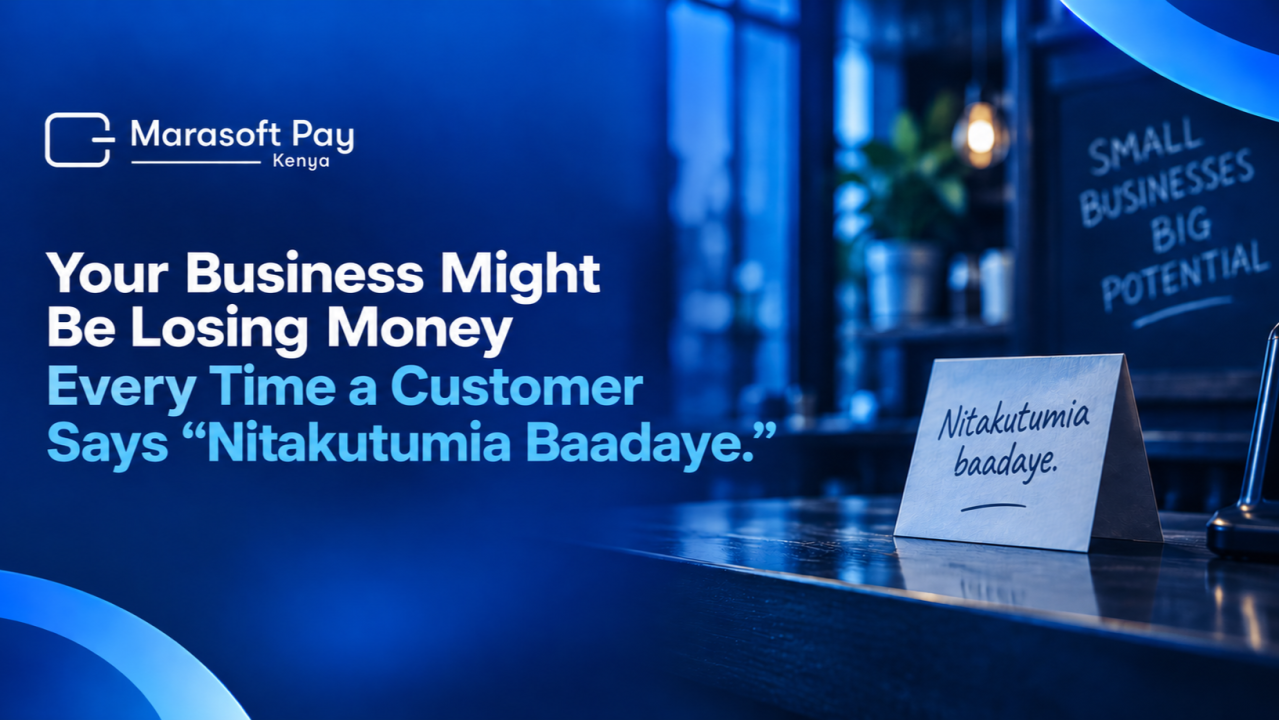
Every Kenyan business owner has heard it. A customer picks up their order, pats their pocket, and says it. “Niko na deni kidogo, nitakutumia baadaye.”
Nobody writes it down properly. Nobody sends a formal invoice. It just becomes another entry in a mental ledger that lives somewhere between your memory and a half-updated notebook under the counter. And somehow, across thousands of small businesses in this country, that mental ledger has quietly become one of the biggest leaks in Kenya SME cash flow, one that barely shows up in any fintech market report, largely because of how difficult mobile money reconciliation in Kenya still is for most small business owners.
Mobile money didn’t kill Kenya’s informal credit economy. It gave it a new home
Before M-Pesa, informal credit ran entirely on trust and memory, a shopkeeper knowing which regular could be trusted for a “book” of sugar until payday. Mobile money should have fixed this. Instead, it just
moved the same behavior onto a phone screen.
“Send it later” now means a Paybill number typed into a notes app, a till number remembered from last time, a vague promise that a transaction will land “kesho.” The payment method got faster. The discipline around tracking it didn’t. This isn’t a small, isolated problem. Research on SME financing in Kenya consistently points to the same root issue: poor financial record-keeping and a lack of structured credit management remain among the
biggest constraints on small business growth, right alongside access to capital itself, according to research published in the Strategic Journal of Business and Change Management. Cash and credit management aren’t a side task. For most small businesses, they’re the whole game, and it’s the part that’s hardest to get right.
The mobile money reconciliation problem nobody talks about
Here’s the part that rarely makes it into a fintech trend piece. A survey covered by Kachwanya found a significant share of Kenyan SMEs remain hesitant about digital payments, not because they don’t trust mobile money, but because of the fear of transaction errors and reconciliation headaches that come with juggling multiple payment channels by hand. When a business is collecting through till numbers, Paybill, bank transfer, and straight cash all at once, keeping an accurate picture of who owes what, and who’s already paid, becomes a genuine daily task, not a background process.
Multiply that friction by every “send it later” a shop owner accepts in a week, and the picture becomes clear. It isn’t one dramatic loss. It’s dozens of tiny, untracked ones, a partial payment here, a “let me top up tomorrow” there, until the gap between what a business is owed and what it can actually account for becomes wide enough to genuinely affect cash flow, without ever showing up as a single line item anyone can point to.
The upside hiding inside the same data
Here’s the twist. The same digital footprint that makes this informal credit economy hard to track is also, if captured properly, one of the most valuable things a small business can build. As one analysis on alternative credit scoring in Kenya puts it plainly, every digital transaction and every record kept helps build a business’s financial identity, the kind lenders increasingly use to assess creditworthiness, in place of the collateral most small businesses simply don’t have. Research from FSD Kenya backs this up too: mobile money statements showing consistent cash inflows and outflows are increasingly how lenders judge whether a borrower can realistically repay a loan.
In other words, the informal credit you’re quietly extending to customers every day isn’t just a leak. Tracked properly, it’s also proof of a functioning, active business, the exact kind of evidence that can unlock better financing down the line. The problem was never that the data didn’t exist. It’s that most small businesses have no simple way to capture it, channel by channel, in one place.
Frequently Asked Questions
Q1. Why do Kenyan SMEs struggle with mobile money reconciliation?
Most small businesses collect payments across multiple channels, till numbers, Paybill, bank transfer, and cash, without a single system to track them. Reconciling these manually, or from memory, makes it easy to lose track of partial payments, delayed transfers, and informal credit extended to customers.
Q2. How does informal credit affect Kenya SME cash flow?
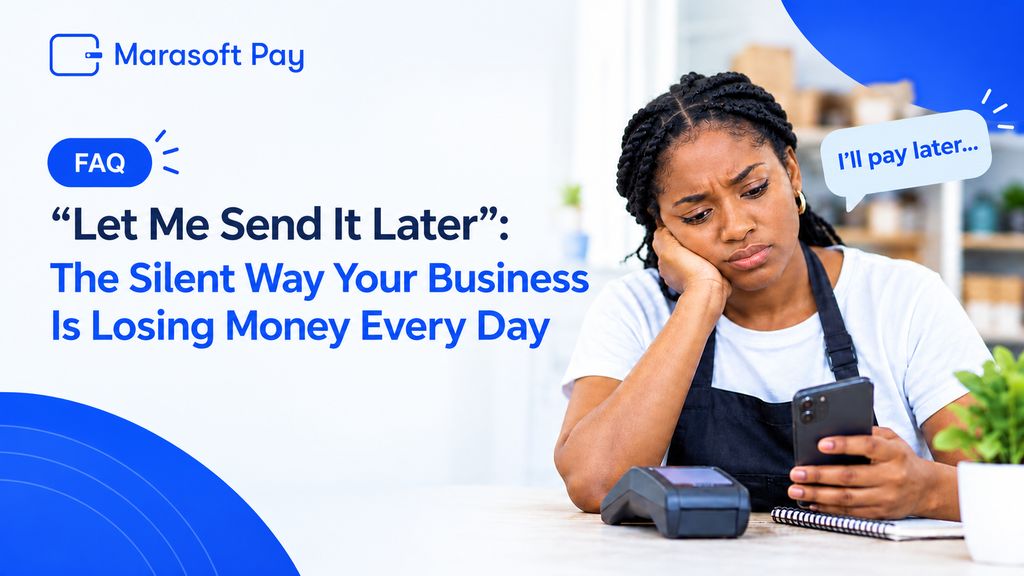
Informal credit, like accepting “send it later” payments, creates a gap between what a business is owed and what it can actually account for. Left
untracked, these small, individually minor gaps accumulate into a meaningful drag on cash flow over time.
Q3. Can better business payment tracking in Kenya improve access to credit?
Yes. Consistent, well-recorded mobile money and digital payment activity can serve as an alternative credit score, giving lenders evidence of real cash flow even for businesses without traditional collateral or formal financial records.
Where do we come in?
This is precisely the gap Marasoft Pay exists to close. Instead of manually tracking who paid through which channel, and chasing down who still owes what, Marasoft Pay brings collections across M-Pesa, Airtel Money, T-Kash, card payments, and bank transfers into a single dashboard, with real-time visibility over what’s actually been settled.
No more guessing whether “nitakutumia baadaye” ever actually landed. No more reconciling five different payment channels by hand at the end of the day. Just one clear picture of your business’s money, exactly where it needs to be to stop the quiet leak and start using that same data to your
advantage. Ready to simplify how your business collects, tracks, and settles payments? Visit marasoftpaykenya.com to get started.
For more insights on payments and digital finance in Kenya, explore more articles on the Marasoft Pay blog.
This is a nice piece of article.