
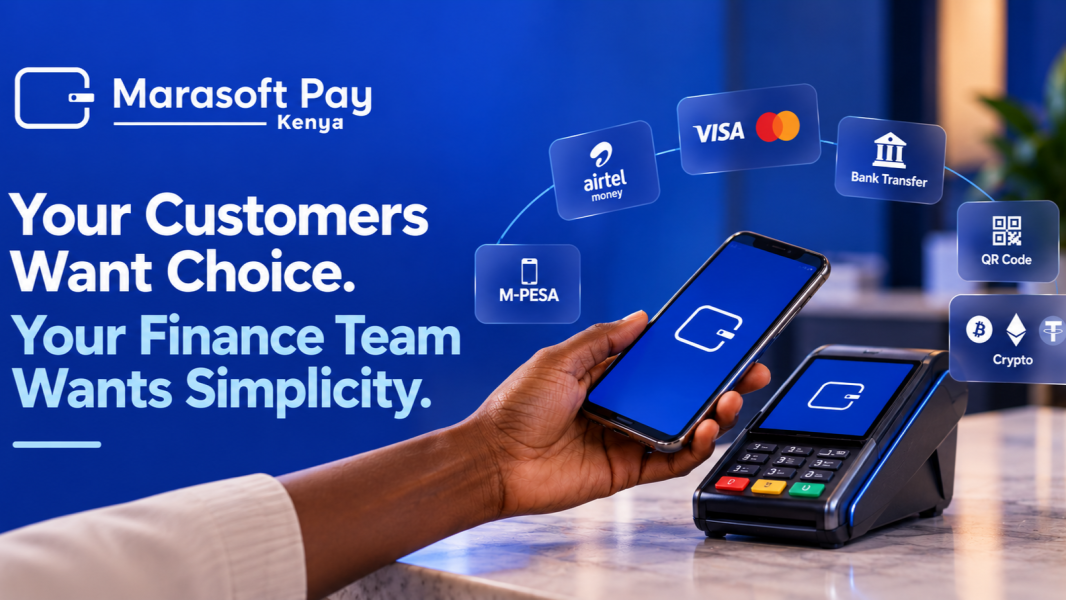
How many payment options should a Kenyan business offer? A year ago the answer was easy: mobile money, maybe cash, maybe a card machine. This year the checkout keeps growing. Safaricom launched Tap to Pay in August, and Airtel Money has confirmed an international virtual card for Kenya. More ways to pay is good news for customers. It is quietly becoming a problem for the people who keep the books.
The payment menu keeps getting longer
Take a single mobile money provider. A customer can now tap an NFC phone, scan a QR code, approve an STK Push or send to a till number. If a tap fails, merchants are told to fall back to a prompt, a QR code or the till number. That is four routes into a single provider.
Then add the rest. Airtel Money is preparing a virtual card so customers can pay international websites straight from their wallet, and it has already issued more than 875,000 cards in other markets. The appetite for cross border spending is real: global payments revenue at Kenya’s largest mobile money operator grew 22.3 percent to Sh4.8 billion in the year to March 2026. Enterprise software vendors are building payments into their platforms,
and continental systems are widening cross border connections. Customers will expect all of it.
So how many options is enough?
As many as your customers actually use. For most Kenyan businesses that means:
1. Mobile money, including STK Push, Paybill and till numbers
2. Digital wallets
3. Cards
4. Bank transfers
5. QR codes
6. International payments, if you sell or source across borders
7. Crypto or stablecoins, where your customers or suppliers already hold them
You do not need every option on day one. Start with the ones your customers already reach for, and add others when demand shows up.
The danger of too many disconnected options
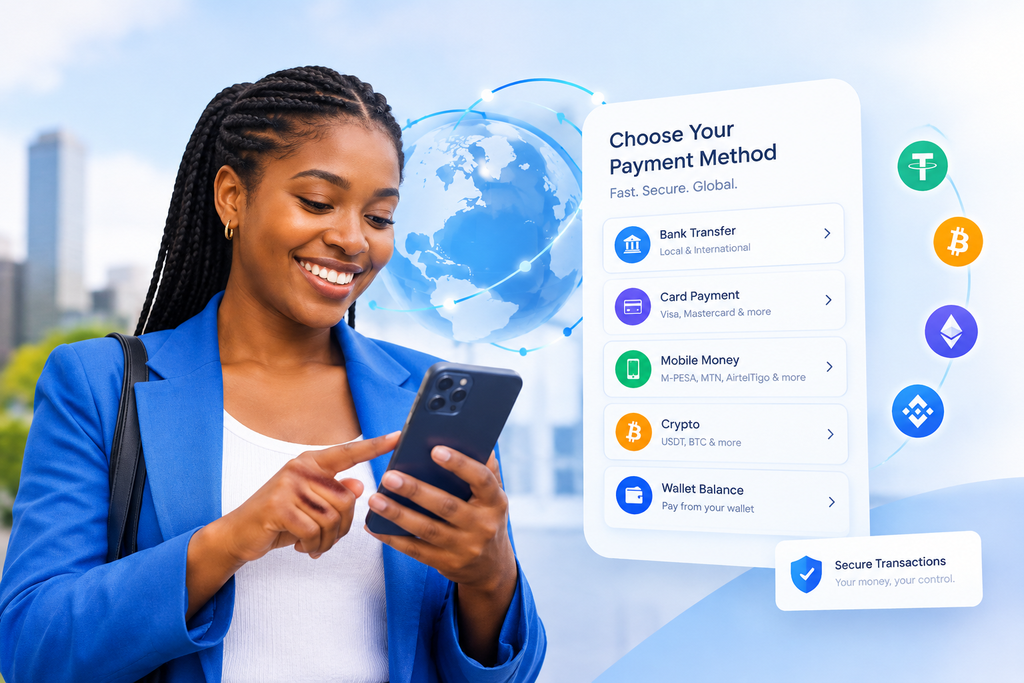
Every channel you add comes with its own statement, its own settlement timing and its own way of failing. Offer five options without connecting them, and your finance team is reconciling five sets of records by hand. The customer sees choice. Your accountant sees a spreadsheet, a notebook and a lot of “did that one come through?”
Offering more ways to pay is not the risk. Offering them without a single view of the money is.
The real fix is at the back end
Choice belongs at the front of the checkout. Simplicity belongs at the back. When every payment lands in one place, you can see what is collected, what is pending and what has settled, and reconcile without chasing screenshots.
Quick answers
Should a small business accept every payment method?
No. Accept the methods your customers already use, and make sure you can track all of them in one place.
What is the biggest risk of offering many payment options?
Disconnected records. Each channel settles and reports differently, which makes manual reconciliation slow and error prone.
Where Marasoft Pay comes in
Marasoft Pay gives Kenyan businesses one dashboard for every channel their customers use: M-Pesa (STK Push, Paybill and till numbers), Airtel Money, T-Kash, cards and bank transfers, plus crypto settlement in USDT, Bitcoin and Ethereum. Settle in KES, NGN or USD, track collections in real time, reconcile automatically and issue KRA eTIMS compliant invoices without the manual back and forth.
Your customers get all the choice they want. Your finance team gets one place to look.
Ready to simplify how your business collects and settles payments? Visit marasoftpaykenya.com to get started. For more insights on payments and digital finance in Kenya, explore the Marasoft Pay blog.