
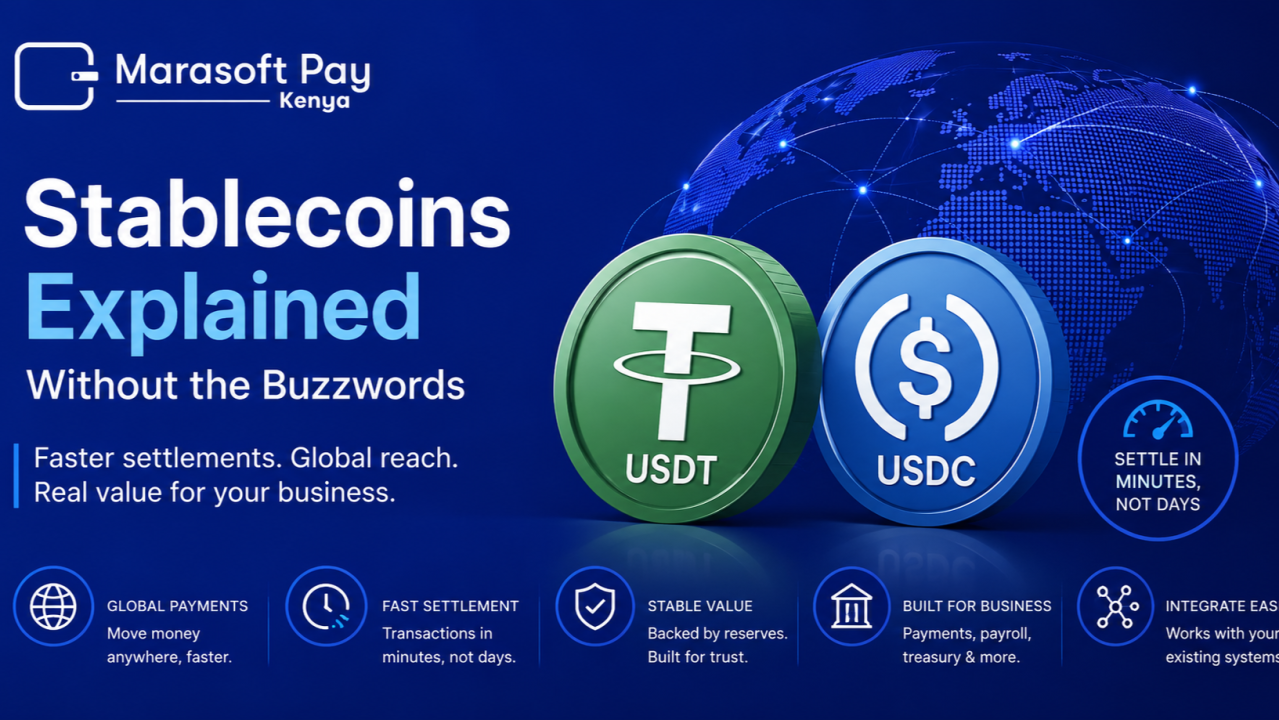
For years, businesses exploring digital payments have had to navigate a flood of technical jargon: blockchain, tokenization, decentralized finance, smart contracts, and more. Amid all the noise, one innovation is quietly becoming a practical tool for global commerce: stablecoins.
At their core, stablecoins are digital currencies designed to maintain a stable value by being pegged to a traditional currency such as the US dollar. Unlike cryptocurrencies that can experience significant price swings, stablecoins aim to offer predictability, making them suitable for everyday business transactions.
Two of the most widely used stablecoins today are USDT (Tether) and USDC (USD Coin). Both are designed to maintain a value of approximately one US dollar per token and are used by businesses, payment providers, and financial institutions around the world.
Why Are Businesses Paying Attention?
The answer is simple: speed. Traditional cross-border payments often involve multiple intermediaries, correspondent banks, settlement windows, and reconciliation processes. Depending on the countries involved, transfers can take several days to complete.
Stablecoins significantly reduce these delays. Transactions can often settle within minutes, regardless of geographic location, enabling businesses to move funds faster and gain greater visibility into cash flows.
USDT vs USDC: What’s the Difference?
Both USDT and USDC serve a similar purpose, but they differ in governance and transparency.
USDT (Tether) is the world’s largest stablecoin by market capitalization and is widely used across global markets due to its liquidity and broad adoption.
USDC (USD Coin) is issued by regulated financial entities and is often preferred by organizations seeking greater transparency and regulatory alignment.
For many businesses, the choice between USDT and USDC depends on operational requirements, compliance considerations, and ecosystem preferences.
Real Business Use Cases
Stablecoins are no longer limited to cryptocurrency trading. Businesses are increasingly using them for:
- Cross-border supplier payments
- International payroll disbursements
- Treasury management
- Faster settlement of business transactions
- Reducing foreign exchange friction
- Accessing global payment networks
For organizations operating across multiple markets, stablecoins can provide an efficient alternative to traditional payment rails.
The Future of Settlement
As global commerce becomes increasingly digital, businesses are under pressure to move funds faster, reduce operational complexity, and improve cash flow visibility. Stablecoins offer a practical solution by combining the speed of digital assets with the stability of traditional currencies. The conversation is no longer about whether digital assets will play a role in payments. The focus is now on how businesses can use them responsibly and strategically to improve efficiency and remain competitive. At Marasoftpay, we help organizations navigate the evolving digital payments landscape with solutions designed to support faster, smarter, and more efficient financial operations. To register on the platform, click MarasoftPay and SignUp.